TotalClaim
TotalClaim
TotalClaim
Role Based Claims Management Platform
Role Based Claims Management Platform
Role Based Claims Management Platform
Industry
Industry
Financial Services / Regulated Claims Management
Duration
1 Week
About
TotalClaim is a platform that helps everyday people find out if they were mis-sold loans or charged hidden commissions. A person fills out a simple form, and the system checks their credit history to see if any of their past loans qualify for a legal claim. If something looks wrong, TotalClaim turns that information into a case that can be sent to the bank.Behind the scenes, it’s a smart automation system that reads credit reports, pulls out loan agreements, and turns them into real legal claims that staff can work on and lenders can respond to
TotalClaim is a platform that helps everyday people find out if they were mis-sold loans or charged hidden commissions. A person fills out a simple form, and the system checks their credit history to see if any of their past loans qualify for a legal claim. If something looks wrong, TotalClaim turns that information into a case that can be sent to the bank.Behind the scenes, it’s a smart automation system that reads credit reports, pulls out loan agreements, and turns them into real legal claims that staff can work on and lenders can respond to
TotalClaim is a platform that helps everyday people find out if they were mis-sold loans or charged hidden commissions. A person fills out a simple form, and the system checks their credit history to see if any of their past loans qualify for a legal claim. If something looks wrong, TotalClaim turns that information into a case that can be sent to the bank.Behind the scenes, it’s a smart automation system that reads credit reports, pulls out loan agreements, and turns them into real legal claims that staff can work on and lenders can respond to
Challenges
Challenges
Challenges
The business was running on one shared CRM for everyone. Introducers, staff, managers, and admins. This meant people were constantly seeing information that wasn’t meant for their role. Introducers could see internal claim data, staff were buried in marketing numbers, and managers struggled to find what mattered. It created confusion, slowed the team down, and increased the risk of errors.
The business was running on one shared CRM for everyone. Introducers, staff, managers, and admins. This meant people were constantly seeing information that wasn’t meant for their role. Introducers could see internal claim data, staff were buried in marketing numbers, and managers struggled to find what mattered. It created confusion, slowed the team down, and increased the risk of errors.
The business was running on one shared CRM for everyone. Introducers, staff, managers, and admins. This meant people were constantly seeing information that wasn’t meant for their role. Introducers could see internal claim data, staff were buried in marketing numbers, and managers struggled to find what mattered. It created confusion, slowed the team down, and increased the risk of errors.
My Role
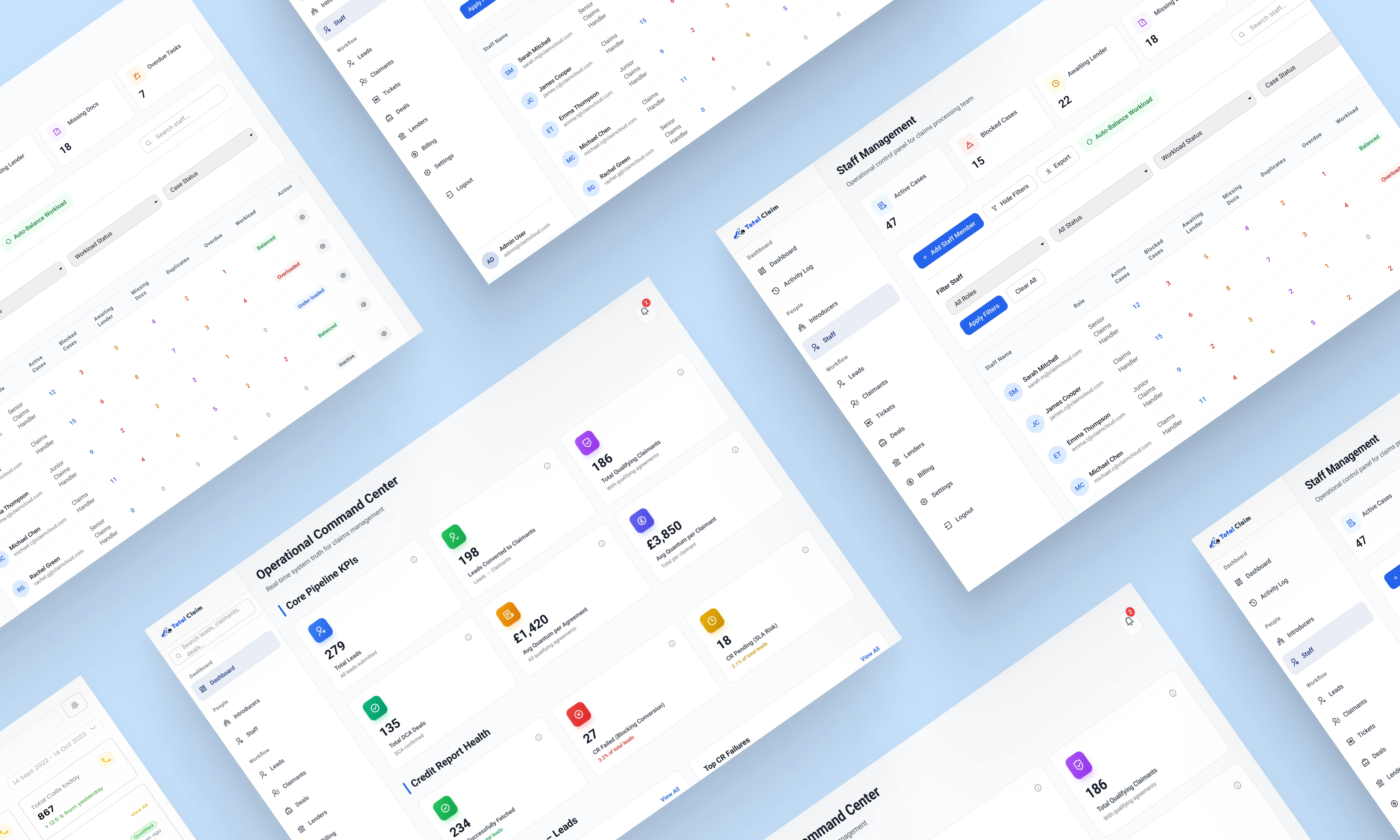
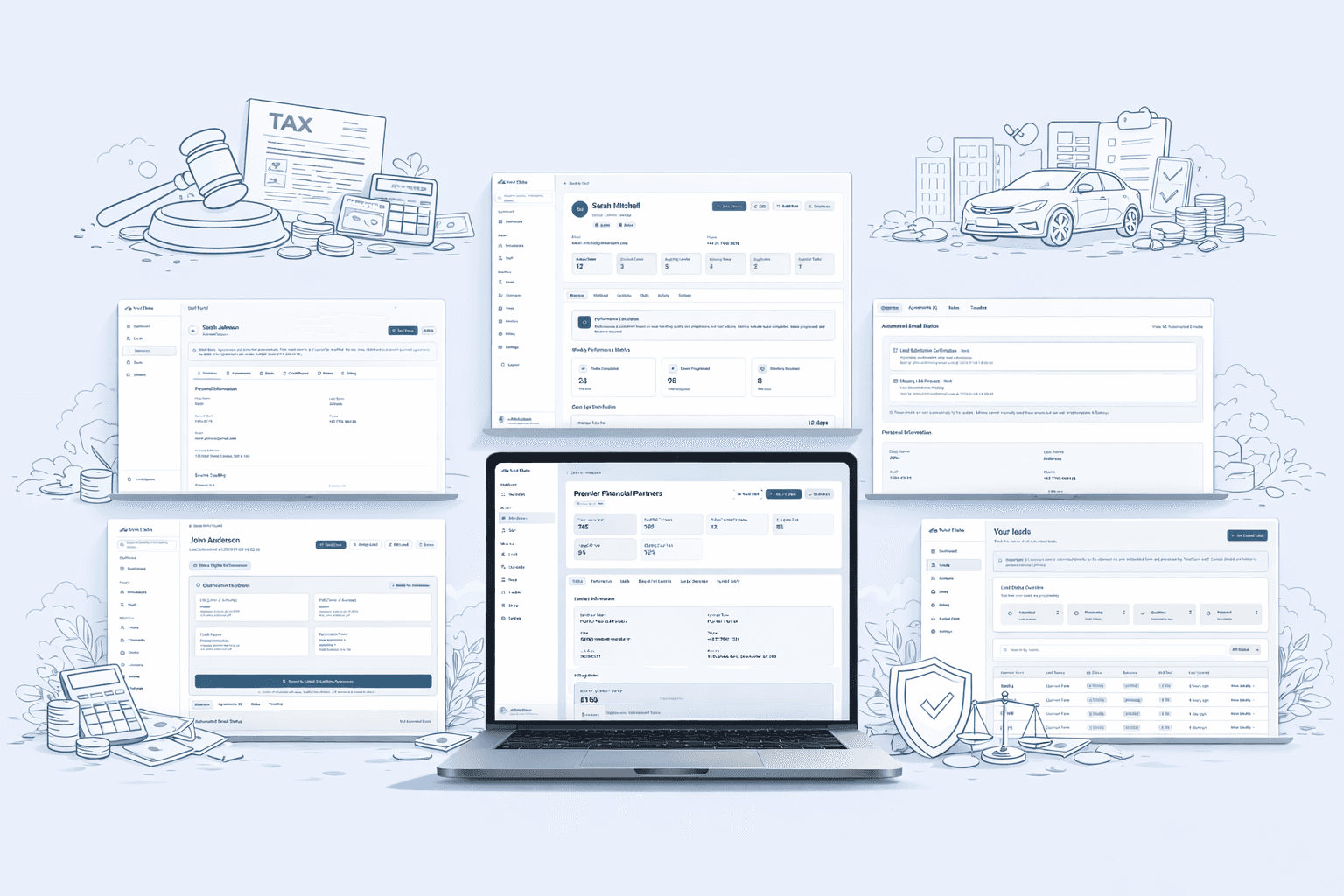
My role was to redesign the system so it reflected how the business actually works. I analyzed how claims are created, how people use the platform, and how data flows through the system, then defined clear roles and responsibilities for each type of user.I mapped the full journey from a person submitting a form to a claim being sent to a lender. Based on that, I rebuilt the UX so each role had its own dashboard, its own data, and its own workflow. I removed irrelevant information, clarified responsibilities, and made sure automation handled the complex parts.
My role was to redesign the system so it reflected how the business actually works. I analyzed how claims are created, how people use the platform, and how data flows through the system, then defined clear roles and responsibilities for each type of user.I mapped the full journey from a person submitting a form to a claim being sent to a lender. Based on that, I rebuilt the UX so each role had its own dashboard, its own data, and its own workflow. I removed irrelevant information, clarified responsibilities, and made sure automation handled the complex parts.
My role was to redesign the system so it reflected how the business actually works. I analyzed how claims are created, how people use the platform, and how data flows through the system, then defined clear roles and responsibilities for each type of user.I mapped the full journey from a person submitting a form to a claim being sent to a lender. Based on that, I rebuilt the UX so each role had its own dashboard, its own data, and its own workflow. I removed irrelevant information, clarified responsibilities, and made sure automation handled the complex parts.
Result
Result
Result
The platform became easier to understand and much faster to use. People stopped feeling overwhelmed, mistakes dropped, and every team could focus on what they do best - turning TotalClaim into a scalable, reliable claims system.
The platform became easier to understand and much faster to use. People stopped feeling overwhelmed, mistakes dropped, and every team could focus on what they do best - turning TotalClaim into a scalable, reliable claims system.
The platform became easier to understand and much faster to use. People stopped feeling overwhelmed, mistakes dropped, and every team could focus on what they do best - turning TotalClaim into a scalable, reliable claims system.